How Companies FOOL You!
Jaago Grahak Jaago
4/23/202515 min read
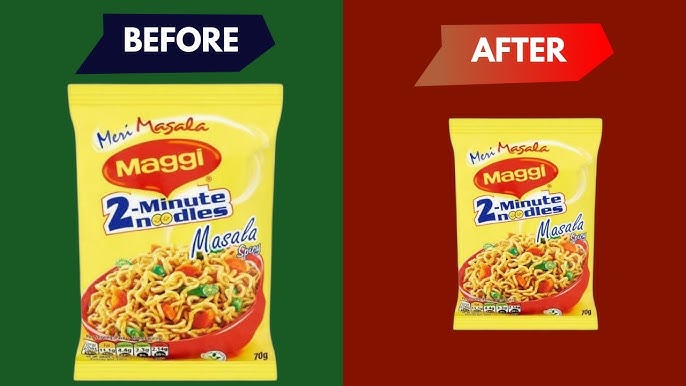
In January 2025, on Zepto's Android app 1 kg onions was selling for ₹43. Whereas, on an iPhone, they were going for ₹57. 500 grams of grapes were being sold for ₹146 on the iPhone, and only for ₹65 on Android. The weight of a packet of Maggi reduced from 80g to 55g. The ₹20 bottles of Thums Up and Coca-Cola got smaller, from 250ml to 200ml. Literally, even toilet paper is getting smaller. Companies intentionally make such products that would work well for a while and then break down. Even though they have the technology to make better products. On one hand, these companies are intentionally slowing down your phone, on the other hand, they don't even inform the consumers that the software updates will slow down their phone. Oppo, Vivo, Realme, OnePlus, and brands like IQOO are owned by the same Chinese company, BBK Electronics. Hello, friends! Imagine it's 11:30 PM, and you're outside. You want to go home but there is no public transport, bus or metro. There's only 5% battery left in your phone. So you quickly log on to a cab booking app on your phone. You hope that you can book a taxi on this app and you'll reach home quickly. But as soon as you open this app, you are shocked. The prices are double than normal. You'd assume that this is because of "surge pricing" due to high demand and fewer drivers. But the problem is that you don't have much time to think because by now, you have only 3% battery remaining. So you quickly book a taxi at double the prices and reach home. Now how would it feel if I tell you that this wasn't due to surge pricing? This app knew that your phone had low battery, so it increased the prices for you. A Belgian newspaper did a study in 2023, in which they took two phones. One phone's battery level was at 12%, the other's at 84%. Both phones went on Uber's app and tried to order a taxi from the same location. When the prices were compared it was found that Uber was charging more on the phone whose battery was at 12%. Although Uber has denied doing this, but in an interview to NPR in 2016, Uber's Head of Economic Research, Keith Chen said that Uber has identified that if the phone's battery is about to run out, people are willing to pay more. And Uber's app can check the battery level of your device. Although he said that Uber doesn't use this information to set prices, but there have been such claims again and again, that Uber does this. In January 2025, Rishabh Singh, the founder of the Engineer Hub, ran an experiment where he found that Uber was charging more to book cabs on devices with low battery levels. Apart from this, such apps are also accused of charging iPhone users more than Android users, for the same thing. Look at this tweet, Zepto has also been accused of doing the same. Green bell pepper is available on Android phones for ₹21, and for ₹107 on iPhone. Such incidents have been getting more frequent over the past few years, where companies are adopting these strange methods to rob and fool customers. This isn't about a single product or service. Companies are doing this systematically and on a large scale. Let's understand this topic in depth in this video and learn about 5 such ways which are used by companies to fool you. Let's start with smartphones. All of us have these phones. Its battery doesn't last more than 3-4 years. After that the battery performance is so poor that you are forced to buy a new phone. But think about it, had the batteries of these phones were designed such that they could be easily removed and replaced. From a technological perspective, it isn't difficult to do. In many electronic appliances, the batteries are replaceable. But in these smartphones, the batteries are deliberately sealed in such a way that it becomes non-replaceable. These companies force us to buy new phones regularly. This is known as Planned Obsolescence. Companies deliberately make such products that work well for a while and then stop working. Even though they have the technology to make better products. For example, customers have been claiming for a long time that Apple slows down its iPhones so that people buy new iPhones. In 2018, Italy's Competition Authority investigated this, wherein they found that after some software updates, the performance of smartphones gets worse. After this, they fined Apple for €10 million and Samsung for €5 million. During this investigation, it was found that when these companies release new software updates, these updates intentionally slow down the older phones. In 2020, in France, Apple was charged with slowing down older phones without informing customers, and was imposed a fine of €25 million. That means that on one hand these companies are intentionally slowing down your phone, and on the other hand, they aren't even telling the consumers that the software updates will slow down their phone. Apple has accepted that older iPhone models do get slower, but their excuse was that it is only because the battery performance of older phones gets worse. And the chances of their unexpectedly shuting down increases. Now the question is, if they know that this happens, then why don't they give us replaceable batteries in our phones? Why don't they give us the option to replace the battery easily? Look at this news from last year. In America, Apple was made to pay the customers, because of these issues. They had to pay a total of $500 million to the customers. But Planned Obsolescence is not a new strategy. About 100 years ago, light bulb manufacturers used this to boost their earnings. Initially, the bulbs they made used to last for a long time. But this meant low earnings. That's why all bulb manufacturers reduced the lifespan of their bulbs. Today, because of this, we find that many electronic appliances, whether it's our fridge, washing machine or microwave oven, their lifespan is only 5 to 7 years. In many cases, these stop working within 3 to 4 years. But ask your parents how long did the fridges and washing machines of their time lasted. Companies are deliberately using cheap materials and such designs that their products would break easily. And you'd be forced to buy them again. The solution to this can only be at the government level. In 2021, the European Union introduced the Right to Repair Rules to counter this. These rules state that after manufacturing a product, companies would need to carry its replacement parts for at least 10 years. Apart from this, the rules also state that all products should be easily repairable. The screws and spare parts used in it, should be commonly available and universal. Because of this law, Apple had to start using USB-C chargers iPhone 15 onwards. The same charger used by Android phones. So that there is a universal charger. Before this, Apple used lightning connector for charging its iPhones. They were the manufacturers of the cables too. So if someone's charging cable got damaged, they had to buy another only from Apple. The second tactic is Shrinkflation. In 2021, the ₹10 packet of Parle-G contained 140 gm biscuits. In 2022, the same ₹10 packet contained only 110 gm biscuits. When this packet was introduced many years ago, it used to contain 250 g biscuits. This is known as Shrinkflation. With time, companies won't raise their prices, but will reduce the size of their products. The size of a Maggi packet has reduced from 80g to 55g. The size of the ₹20 bottles of Thums Up and Coca-Cola has reduced from 250ml to 200ml. There are many memes on this, like the size of the Big Mac which you could get in 2004, and the Big Mac which you get in 2024. In a packet of Lays there are only a handful of chips, most of it is just air. This was happening naturally with time, but after Covid, we have seen a drastic change. In 2022, within 3 months, the size of a ₹10 Vim dish soap was reduced from 155 grams to 135 grams. A ₹10 Haldiram's Aloo Bhujia, used to weigh 55g earlier, now it weighs only 42 grams. Earlier, a ₹1 Hajmola packet had 6 tablets, now there are only 4. This isn't limited to India, it can be seen all over the world. In 2022, Dominos reduced the number of chicken wings in their $7.99 chicken wings from 10 to 8. Before 2023, Walmart's toilet paper rolls had 168 sheets. This was reduced by 28% and now they have 120 sheets. Literally, even the size of toilet paper is getting smaller. -"Is this your egg?" -"Yes." "This is the egg." "Oh wow!" "Look at that!" "Judge for yourself, America." Many times this has been done so innovatively that the customers could even figure it out. For example, in 2013 when Cadbury reduced the size of Dairy Milk bar by 10%, they didn't reduce the number of squares in each chocolate bar. They reduced the size of each square and reduced the thickness of the entire chocolate bar. Similarly, in 2016, when Toblerone reduced the weight of its chocolate from 400g to 360g, they did it by increasing the space between each piece of chocolate. Then comes the tactic of misusing Buzzwords. They use the trending words in their marketing to fool the customers. Like nowadays, "AI" is a very trendy word. So companies have added the AI tag in all their products ranging from phones to washing machines. Also known as AI washing. While selling their products, these company claims that their products use machine learning or deep learning, claiming that their washing machine is an "AI-powered machine." When they use these big words, it seems like you are getting a great product. So it becomes worth buying. But in reality, often this is meaningless. Take the example of 'Revolutionary' 'AI-powered' refrigerators sold today. They actually run on pre-programmed settings which has been labelled to be AI. There are 'AI' washing machines which can recognise the fabric of the clothes but after buying it, you will find that they use basic temperature settings. Marketing plays a major role in selling new products to people. while companies make big claims. Like this famous RO brand claims that it is the #1 choice of doctors. It sounds like all doctors have collectively endorsed this RO. Many toothpaste companies do this too. Claiming to be the #1 choice of dentists. And that such and such percentage of dentists recommend their product. But according to the Rules of Ethics of the Medical Council of India, no doctor can endorse or recommend any commercial product. ASCI has said that such claims are misleading and such companies often had to withdraw their ads. In some ads, these companies mentioned WHO but they chose not mention that they didn't mean the World Health Organisation, rather, they were talking about some Women's Health Organisation, an organisation which isn't credible. The next tactic to rob the public is called the Razor & Blade Model. The company sells its main product for cheap, to create a dependency among people, while the main source of the company's profit is a side product, which is quite expensive. But you'll need to buy it repeatedly. Like in the case of a razor and blades, razor is bought once, but you'll need to buy the blades time and again. That's why it is called the Razor & Blade model. Most of the company's profits is from selling blades. Selling printers is also a perfect example of this. Companies sell their printers at a loss. So that they can sell their expensive ink later. And here, you might try to outsmart them by buying ink from other companies, and using it on the printer your bought. But these companies have deliberately designed their printers such that only the ink cartridges of their company will be compatible with your printer. These companies have started putting microchips in the printers. Firmware updates are issued regularly, to prevent you from using any third party ink. Look at this article, in 2018, 9 printer companies sent around 900 such updates. That is almost 3 updates each day. Just to check whether you are using some other company's ink in your printer. If you did, the they stopped your printer from working. And if it doesn't stop working, then the printer's warranty would lapse. But customers aren't told this before they buy the printer. The cost of making 1 liter of ink is around $20-$40. But at what price do they sell this ink? According to this website's estimate, 1 gallon of ink, that is 3.7 liters of ink is sold for around $12,000. This amount is so high that even human blood is cheaper than this. If you ask these companies why do they do this, their excuse will be that they need to spend a lot on research and development. That's why they have to charge so much. But the truth is that this is just a tactic to earn more money. A tactic to rob customers. On top of that, there's shrinkflation in the ink cartridges too. The quantity of ink in these cartridges is also decreasing. Until a few years ago, the ink cartridges that were sold as 'Standard' cartridges, they are now being sold as an 'Extra Large' cartridge. The company HP ran into a huge problem regarding this in Australia. They had to apologise to their customers and had to pay around $50 to 2,000 customers amounting to a total of $100,000. In 2022, they had to settle with customers in Europe as well, and HP had to pay $1.35 million as compensation. In October 2019, another printer company, Epson, was also sued in the US because their printers stopped working when third party ink was used. Water purifying companies use this tactic on a smaller scale. Once you've bought a water purifier, you will have to get it serviced every year and change the filter. Isn't there a technology to make better filters? Of course there is. Look at Urban Company's Native RO. Its filter doesn't need servicing for 2 years. This is a new product brand by Urban Company. They are among the few companies who follow honest and transparent marketing. They aren't making false promises of their RO being recommended by doctors, or giving you 99.9999% pure water. They ask you to buy their water purifiers and tell you about the 10 stages of filtration in their water purifier. They list the innovative technologies they use, and tell you that won't need to replace the filter for 2 years. This product requires lower maintenance. Along with this, their warranty is unconditional to a large extent. Regardless of the water quality at your home, regardless of how much water you use, or however you use the machine, the company will cover almost all of it in their warranty. This is perhaps the first such warranty in the category of home appliances. I believe that we should support such companies, who actually bring innovation instead of trying to find different ways to rob customers. Urban Company's Native RO is such a product and I would like to thank them for sponsoring this video. Also, in case of warranties, this is another tactic to rob customers. The warranties of many products don't even work. Like, look at this case, in May 2014, in Bengaluru, Madan Raj bought a washing machine from IFB. But in November 2015, the machine stopped working suddenly. The machine had a 4-year warranty but when he contacted IFB, he was told to buy a new machine on a 50% exchange because many of the parts of this machine weren't being manufactured. When Madan filed a case, IFB informed the court that no part of the machine needed to be replaced rather, the iron on the top cover was damaged, which wasn't covered by the warranty. Then, Madan showed the warranty card, which mentioned covering all parts of the washing machine. Madan was promised top-class service and a 4-year warranty. But on one hand the company wasn't providing good service and on the other, they were lying and trying to force Madan into buying a new washing machine. It's the same in the water purifier industry. They use the AMC strategy. AMC stands for Annual Maintenance Contract. This is a service agreement in which the company provides maintenance and servicing throughout the year in exchange of specific fees. But even with this, it is the company who benefits, not the customer. For example, the AMC of a famous water purifier brand can cost up to ₹2,500. But expensive parts like RO membrane, filter, activated carbon, UF membrane, and the tank, which cost around ₹4,000-₹6,000, aren't covered in this. And every year, to get them changed, customers have to pay additionally. If you move to a new house, you have to call over an engineer from the company and pay ₹600, because if you try to move your water purifier yourself, your AMC will be cancelled. Another famous RO company has said that if their RO runs for more than 8 hours a day, then it won't be freely replaced under their AMC. Native RO has changed this predatory model. Since their filters are supposed to work fine for 2 years, you won't need an AMC to begin with. This is how customers benefit when there's competition in an industry. When there are new brands, they challenge the older brands with new innovations. But the industries which have monopolies of companies, things will continue to go on as they have been. If all the companies in an industry keep robbing customers in the same way, then customers are left with no choice. Talking about misleading marketing, that can be discussed in an hour-long video. Often, the very word 'innovation' is sold as part of marketing. In the name of innovation, phones are folded one way or the other, sometimes they may add a camera, or sometimes they may move the SIM card slot a little. Samsung Galaxy S24 Ultra and S23 Ultra are almost similar. If you give an iPhone 16 and an iPhone 15 to an average person and ask him to spot the differences, it will take him hours. Brands like OPPO, Vivo, Realme, OnePlus, and IQOO are owned by the same Chinese company, BBK Electronics. These brands keep launching newer phones, and you think that you have so many options, but at the end of the day, all of them are made by the same company. While these companies are robbing us customers, not only are the customers suffering, but it is adversely affecting the environment too. Making products that are destined to break down in a short while. Launching new products every year, irrespective of any innovation or lack thereof, this is increasing the consumption levels. Requiring more mining of elements like gold, cobalt, and lithium. From mining for rare earth minerals to the production and use of phones, everything results in carbon emissions. In 2020, smartphones caused 580 million tonnes of CO2 emissions. Because of so many electronics, there's e-waste generation too. 10% of the world's e-waste is caused by smartphones. Another famous tactic to fool customers is Drip Pricing. Under this, customers are shown a lower price of the product first. And when they go to purchase it, various taxes and charges are added to it to increase the price. So the final price of the product isn't mentioned in the ads. Companies do this because they think that once they lure the customer with a low-priced product, then by the time they get to know about the additional costs, the customer would have already decided to buy the product, so he won't leave empty-handed. Look at this example, these shoes are supposedly selling for ₹4,700. But when you go to buy them, they'll add handling charges, donation, and platform charges, and the real cost will be ₹5,130. Food delivery apps do this too when you order food, or when you buy movie tickets on a platform like BookMyShow. The central government has already issued a warning regarding this, but the companies have not stopped doing it. Now, a tactic similar to the drip pricing is the Bait and Switch method. In this, companies give you good, low-priced offers to lure in the customers, and then sell them something else. Suppose a customer goes to buy a 50-inch plasma TV. But when he reached the store, he was told that it has sold out. But by then, the customer had already made up his mind to buy a TV. So the salesman tries to convince him by saying that even though one model is sold out, they have another plasma TV similar to it. Showing him a 30-inch TV. Telling him that it is cheaper and good enough. But when the store sells it, the profit margin on this second product is higher. Even in hotel businesses, the bait and switch method is used a lot. To lure in hotel customers, they are shown low-priced rooms first. But there's a mandatory fee too. While checking out later, this fee and multiple other charges are added to the price. Now, talking about the tactic I mentioned at the beginning of the video. Many e-commerce companies are facing such accusations. In December 2024, a man named Saurabh Sharma tweeted saying that the suitcase he was seeing on Flipkart's Android app was priced at ₹4,119. But on the iOS app, the same suitcase was priced at ₹4,799. In January 2025, on Zepto's Android app, 1kg onion cost was priced at ₹43, whereas on iPhones, it was priced at ₹57 per kg. 500 grams of grapes were priced ₹146 on iPhone, but on Android it was priced only ₹65. Some apps even have different subscription fees. If you buy a YouTube Premium subscription on iPhone, it costs ₹195. On Android, it costs ₹149. Buying a Premium Plus subscription on Twitter, costs ₹2,299 per month on iPhone. On Android, the same costs ₹2,150. Overall, the fact remains that, as customers, we need to wake up. The more we raise our voice against these tactics used by companies to fool us, the more will be the pressure on them. Governments need to make strict regulations towards this, and to take action against these companies, as is done in developed countries abroad. Next time you see such injustice happening to you, speak out against it. Tag the company's handles on Twitter and tweet. email them, and or make Instagram Reels make short videos to raise awareness about it. The more you call out these companies, the more will be the pressure on them, and they will be forced to take corrective actions. I don't normally ask you to share my videos, but I would definitely ask you to share this video with your friends and family. Because we need more and more people to come together and raise their voices, to put more pressure on these companies.