Why Does India Have SO MANY People?
Population
2/1/202611 min read
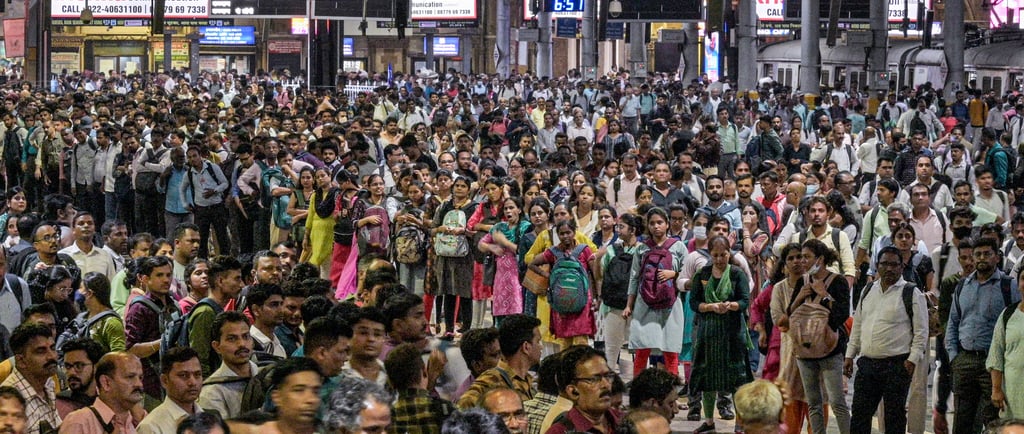
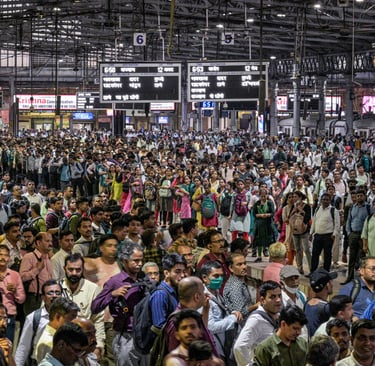
India is the number one country in the world when it comes to population. Ever wondered why that is? There are about 1.47 billion people living here. We've even surpassed China! And the crazy part is, around 18% of the world's population lives in India. But they only have about 2% of the world's land to live on. That's why people often say India is overpopulated. There are many reasons given for overpopulation. Some blame education, others blame poverty. People often say that folks in India aren’t well-educated.
Poor people don’t really know how many kids to have. My own grandpa had 12 kids. And it’s often said that poor people have more children because they think more kids mean more earners at home. Some folks even go as far as blaming states like Uttar Pradesh and Bihar for this. Now, it’s true that Uttar Pradesh and Bihar contribute a huge chunk to India’s population. So much so that if UP and Bihar were separate countries, they’d be the third most populated in the world.
These two combined have a population of 370 million, which is even more than the US and Indonesia. But the reason for such a huge population isn’t because of the people from UP and Bihar; it’s actually something beyond anyone’s control. Let me explain this whole mystery to you in today’s video. If we look at history, a clear pattern emerges. India’s population has always been large—not just now, but 1,000 years ago, 2,000 years ago, even 4,000 years ago. According to British economist Angus Maddison...
From 1 AD to 1000 AD, India’s population made up about 30% of the world’s total population. That means for a thousand years, roughly one in every three people on Earth was Indian. But if you look at today’s numbers, only about one in every six people in the world is Indian. So, the truth is, India’s share of the world population used to be even higher. What’s the reason behind this? In one word: geography. When people talk about population, they usually consider factors like education, literacy rate, poverty, access to healthcare, and so on.
Yeah. But maybe the most important factor people forget to consider is this: population mostly depends on geography. Human civilizations settle where there are rivers and fertile land. If you look at the world’s oldest civilizations, they were all by rivers too. Mesopotamia was by the Tigris and Euphrates rivers—the two great rivers. Those rivers were basically the doors to life. Egypt was by the Nile River. In China, it was near the Yellow River. This is the Yellow River, the mother of Chinese civilization.
The reason the Indus Valley Civilization developed near the Indus River in India is pretty simple. Wherever there’s fertile land and good farming can happen, more food will grow. With more food available, people can eat better, which makes it possible to support a larger population. The amazing thing is that India has had this kind of fertile land for thousands of years. It’s not just a small patch of land, but the largest continuous stretch of fertile plain in the world. We call this the Indo-Gangetic plain. Just look at the map of North India...
It's a strip-like area that starts from Sindh in Pakistan and goes through Punjab, Haryana, Delhi, Uttar Pradesh, Bihar, all the way to the Sundarbans in Bangladesh. This is the Indo-Gangetic plain—the world's largest and most fertile alluvial plain. It covers over 700,000 square kilometers and is home to 11% of the world's population. The reason this plain exists is because of the tallest mountain range on Earth—the Himalayas. The geological story here began around 50 million years ago when the Indian tectonic plate separated from Gondwana.
The Eurasian plate collided with it. This massive collision formed the Himalayan mountain range, and right beneath the Himalayas, a deep depression was created. According to scientists, mainly the rivers from the Himalayas and some from the Deccan started filling this depression with soil and rock pieces—called sediments—about 1.7 million years ago. Because of this, soft, very fertile soil called alluvium gradually built up here. Now, since the mountains got so tall, they had a lot of snow on them. When that snow melted, it created many rivers.
Bani. You won’t find such a concentration of rivers in such a small area anywhere else in the world. The Indo-Gangetic plain is named after two rivers—the Indus and the Ganges. But here, there are actually three main rivers: the Ganges, which flows south; the Brahmaputra, which flows east; and the Indus River, which flows west through Kashmir and Ladakh into Pakistan. It was along the banks of the Indus River that the Indus Valley Civilization began. According to historian team Dyson, at its peak, the population of the Indus Valley Civilization was between 40 to 60 million.
There were millions of people. Back then, it had a bigger population than any other civilization. Only China’s Yellow River civilization, with about 3.5 million people, came close. But the point is, even 4,000 years ago, this region was the most populated in the world because of its fertile plains and these rivers. And you’ll see the same pattern all over the world—wherever there’s fertile land, there’s a higher population. Take a look at China’s North China Plain, formed by three rivers: the Yellow River, the Wei River, and the Hai River. This is China’s largest alluvial plain.
This area is perfect for agriculture, which is why around 400 million people live here. If you look at a population density map of China, you’ll clearly see that most Chinese people live in this region. It’s the most densely populated area in the world. Similarly, over 400 million people live in the Yangtze River’s alluvial plain, China’s longest river. But it’s not just about China. Take Europe, for example. The Netherlands and Belgium are two of the most densely populated countries there. In the Netherlands, there are 531 people per square kilometer, and...
Belgium has a population of 386 people. In comparison, India's average population density is 484. Just think about it—India, which is often called overpopulated, actually has a European country, the Netherlands, that's even more densely populated. And the reason behind that is the same. The Netherlands has very fertile land. It has the Rhine, Meuse, and Scheldt river deltas. There are many rivers, canals all over the country, and flat land. In other words, perfect conditions for agriculture. The Netherlands is such a small country, yet it's the world's second-largest agricultural exporter. Right next to it...
Belgium and northwest Germany also have high population densities because of the same reasons. Just look at the size comparison on the map. The Netherlands is less than half the size of Maharashtra, a state in India. But still, it’s the world’s second-largest agricultural exporter. This shows you the potential of such fertile land. They achieved all this through their high-tech, sustainable, and intensive farming, saving over 90% of their water. Along with that, they built rivers, deltas, and canals—everything.
It’s designed to get the maximum output from every square kilometer. Now just think about the kind of potential India’s vast fertile land holds if used the same way. This potential goes to waste if there isn’t an efficient system to support it. Take Japan’s case, for example. It’s pretty interesting. It’s a small country, but its population is over 120 million. The agricultural land there is really limited—only about 12.5%. Plus, 73% of the country is covered by mountains. But you know what...
So how come the population here is so high? The reason is the same—historically, Japan has had plenty of food. There isn’t much fertile land, but the seas around Japan are full of fish and other sea life, and people here eat a lot of fish. Because of this, Japan has been able to support a large population. Now, you might be wondering—if fertile land means more population, then places like Egypt’s Nile Valley and China’s North China Plain, which also have fertile land, should have high populations too.
So why don’t these places have a population bigger than India? The reason, friends, is the difference in total area. The Indo-Gangetic Plain is so special because it’s the largest fertile plain in the world. Like I mentioned, it covers about 700,000 square kilometers. To compare, the North China Plain is around 400,000 square kilometers, and Egypt’s Nile Valley is only about 33,000 square kilometers. The Nile Valley is just a thin strip with deserts on both its east and west sides. That’s why out of Egypt’s 110 million people, 95% live within 20 kilometers of the Nile River.
People mostly live inland because there’s no fertile land anywhere else; it’s just desert. Besides that, the Indo-Gangetic plain has another big advantage that most other fertile areas in the world don’t have. In Egypt, there’s only one source of water—the Nile River—since there’s hardly any rainfall throughout the year. Similarly, in the North China Plain, there’s very little rain, so river water is essential for farming. But in the Indo-Gangetic plain, the Himalayas have given us not just...
There are a lot of rivers here, and also a whole monsoon season. In these mountains, after the Arctic and Antarctic, you see the most snow in the world. That’s why it’s called the Third Pole. From this Third Pole, 10 major rivers flow out, supplying water to over 1.9 billion people. But on the other hand, the Himalayas also act like a barrier for the southwest monsoon winds. Because of these mountains, the winds can’t cross over to Tibet and end up staying in India, which causes...
The Indo-Gangetic plain gets a lot of rainfall. It experiences a proper monsoon season, which is pretty rare in other places. Another advantage is that these hills block the cold, dry air coming from Central Asia, so it doesn’t get too cold and crops can grow well. So, here you get triple benefits: good weather, fertile land, and the monsoon season. Because of this, farmers in the Indo-Gangetic plain can grow crops two to three times a year, which is really hard to do in other regions. Netherlands,
It gets really cold in the plains of Belgium during winter. The North China and Nile River plains don’t even have a monsoon season. But in India, because the climate is so good, at least two crops have been grown every year for thousands of years. Around 34 BC, a Greek ambassador named Megasthenes came to the court of Emperor Chandragupta Maurya. When he went back to Greece, he wrote the most extensive book about India in the ancient world, called Indica. In this book, he mentioned that India has two crops a year. And the most shocking part...
In India, there’s never really been a famine or a shortage of food because we have two main crops—wheat and rice. So even if one crop fails, there’s no famine. When one piece of land can produce two or three crops a year, it can feed two or three times as many people. That’s why India has always been more populated compared to the rest of the world. Now, some people might argue, if that’s true, then a few years ago China had a bigger population than India. How is that possible? Let’s take a historical look.
Let's look at the numbers. In the year 1 AD, India made up 32.5% of the world's population, while China had 25.8%. Similarly, in the year 1000 AD, 28% of the world's population lived in India and 22% in China. Even 300 years ago, in 1700, India had 27.3% of the world's people, and China had 22.9%. So, the pattern is pretty clear: historically, around 50 to 60% of the world's population always lived in India and China. And if you compare the two, India was always ahead of China. But during this whole time period, there was one major exception.
There’s this anomaly—a reason why China’s population overtook India’s in the last 100 years. It’s not because China’s population suddenly shot up, but because India’s population took a big hit. This happened because of British rule. Under the British, India faced 25 major famines between 1770 and 1947. These famines killed between 30 to 35 million Indians. To put that in perspective, around 8.5 million people died in World War One. So yeah, that’s how massive those famines were.
More people died in India under British rule than four times the number killed in World War One. In 1770, the Great Bengal Famine struck, wiping out one-third of Bengal's population—about 10 million people died. Similarly, between 1876 and 1878, there were great famines that caused the deaths of around 7 to 8 million people. The most infamous was the 1943 Bengal Famine, where 3 million people died. None of these famines were caused by geography or natural factors. The only ones responsible were the British and their exploitative policies. For example, the 1943 Bengal Famine happened because...
During World War II, the British government started stockpiling grains for their soldiers, which led to grain being exported out of India. Roughly speaking, in India's thousands of years of history, the British period was an anomaly where India’s natural prosperity was artificially suppressed. After we gained independence, there was never a famine again. Because of this, India’s population started growing again. Between 1947 and 1981, India’s population doubled, and by 2001, it crossed 1 billion. This population...
The growth happened because the government’s policies boosted India’s fertile land. The Green Revolution started in India in the 1960s, and after that, so much wheat was produced that by 1968, there wasn’t enough space to store it—it had to be kept in schools and theaters. So, friends, this is the root cause behind India’s population growth. I’m not saying factors like education, literacy rate, poverty, and access to healthcare don’t play a role—they definitely do. But all those factors come after these geographical reasons. Now, as people...
Literacy rates are going up, people are becoming more aware, healthcare facilities are improving, and as a result, India’s population is starting to stabilize. India’s total fertility rate has now dropped to 1.9. The replacement level, which is the number of children needed to keep the population steady, is 2.1. So, India is now below that replacement level. This means that in a few decades, India’s population will start to decline. According to United Nations projections, India’s population will peak around the year 2060 and then begin to decrease.
Out of 36 states and union territories, fertility rates in 31 have now reached replacement level or even dropped below it. In some states like Kerala, Tamil Nadu, Andhra Pradesh, and even West Bengal and Maharashtra, it's comparable to European countries, ranging between 1.3 and 1.5. The reality is that India's population is naturally stabilizing now. So, if someone asks you tomorrow why India is so overpopulated, just tell them straight up—India isn’t overpopulated; it's actually geographically blessed. India has the world's largest continuous...
It's fertile land and home to the tallest mountains in the world. You know the line from the national anthem, "Vindhya, Himachal, Yamuna, Ganga," with the waves jumping and splashing. But the unfortunate news, friends, is that all these things are now at risk because of climate change. The rivers that gave us such fertile land are now polluted and drying up. Between 2010 and 2019, Himalayan glaciers have been disappearing 65% faster than the previous decade. You can see the news from this year—there’s been a big drop in snowfall in many parts of Uttarakhand.
Forest fires are happening in winter. In the Himalayas, the snow persistence—that is, how long the snow stays—is at its lowest level in the past 23 years. Projections show that if things keep going like this, by the end of the 21st century, one-third to half of the snow here will be gone. The United Nations Secretary-General has even issued a warning. When global warming melts the ice and glaciers retreat, rivers like the Indus, Ganga, and Brahmaputra will have less water. Because glaciers are melting so fast, the rivers are...
The water flow is increasing, but the total water storage is going down. Because of climate change, the monsoon patterns are changing too. Sometimes it rains way too much, and other times it barely rains at all. In 2022, extreme weather events affected crops on 5 million acres. Besides that, overuse is causing groundwater in the Indo-Gangetic plain to drop rapidly. We really need to do everything we can to protect this blessing for India. If things aren’t controlled here, the Indo-Gangetic plain, which has been a blessing for India, will face serious problems for its large population.
If we don’t take care, it’ll become a curse and there won’t be anything left to feed millions of people. So, it’s really important, friends, that we do everything we can to protect this natural wonder. Make sure you do your bit to keep the rivers clean. Wherever deforestation happens, wherever forests are being cut down, raise your voice. And to fight climate change, stop using fossil fuels wherever possible.